

What if your office layout is silently shaping your team's performance—for better or worse? Workspace design isn’t just about furniture and floor plans. It’s about the psychology of space, the rhythms of collaboration, and the subtle signals that shape how people feel, think, and act at work. A well-designed workspace supports focus, encourages creativity, and reinforces a sense of purpose. A poorly designed one, on the other hand, creates friction—between people, ideas, and even motivation itself.
As organizations rethink how and where work gets done, workspace design has emerged as a critical lever for improving employee well-being and organizational performance.
The Psychology Behind Productive Workspace Design
People don’t do their best work in a vacuum—or in a space that ignores their psychological needs. Whether it's a corner office, shared table, or home workspace, the physical environment plays a pivotal role in how employees engage with their tasks and with one another.
Natural light, acoustics, temperature, layout, and aesthetics all contribute to mood and mental clarity. But more importantly, the way space is used communicates what an organization values: autonomy or control, collaboration or hierarchy, speed or deliberation.
Thoughtful workspace design acknowledges that motivation is not just intrinsic—it’s environmental. When people feel physically comfortable and psychologically supported, they’re more likely to enter flow states, sustain concentration, and experience genuine satisfaction in their work. This creates an environment where organizations can balance individual strengths for collective success.

Open vs. Private: The Great Layout Debate
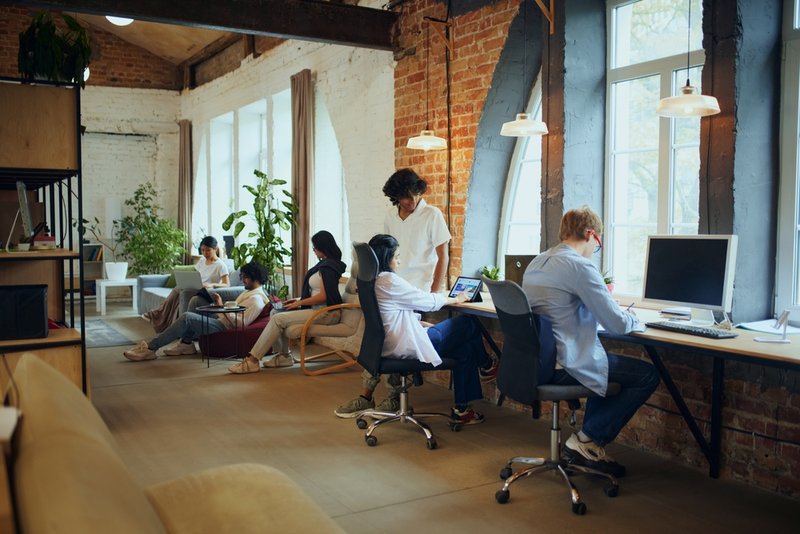
Should your workspace encourage spontaneous brainstorming—or quiet, heads-down work? The open office trend, once hailed as a catalyst for collaboration, has revealed its limits. While open layouts reduce barriers and increase interaction, they can also increase distractions, hinder focus, and reduce employee privacy. On the other hand, fully private offices can isolate teams and limit serendipitous connections.
The most effective environments don’t default to one extreme or the other. Instead, they offer flexibility—blending open areas for collaboration with private zones for deep work. This hybrid approach allows individuals to choose the setting that best supports the task at hand.
Organizations that engage employees in workspace planning tend to strike this balance more effectively. When people have a say in how space functions, they’re more likely to use it with intention. Involving leaders in this process also highlights the role of leadership in navigating change, ensuring that shifts in design align with organizational goals.
Technology’s Role in Modern Workspace Design
Modern workspace design extends far beyond physical walls. Technology now shapes how work happens—across time zones, devices, and digital platforms.
Incorporating the right tech into workspace planning enhances both connectivity and performance. Video conferencing tools, digital whiteboards, noise-canceling systems, and intelligent lighting can all optimize the user experience. But when these tools are clunky, outdated, or overly complex, they become barriers instead of enablers.
Tech should be an invisible ally in the workspace: always available, never intrusive. The best implementations seamlessly integrate into daily workflows, allowing teams to focus on what matters most—solving problems, sharing ideas, and driving outcomes. This technological alignment can also aid in building resilience in times of uncertainty, allowing teams to adapt swiftly and maintain productivity.
Culture Drives the Utility of Any Workspace
Design alone doesn’t build motivation. Culture determines whether a space is used effectively or not. An inspiring office won’t offset a toxic culture. And no layout can compensate for unclear priorities or lack of trust. For workspace design to truly support productivity, it must be aligned with how the organization operates and what it stands for.
Does your culture encourage autonomy? Then space should reflect that—with quiet zones, flexible seating, and tools for independent work. Do you prioritize innovation? Then you’ll need communal areas that encourage idea-sharing and quick iteration. Is transparency a core value? Then maybe glass-walled meeting rooms and open leadership offices make sense.
Culture and space must be designed together—each reinforcing the other. When aligned, they create an environment where motivation flourishes organically, not artificially. This synergy exemplifies the importance of merging culture, accountability, and decision-making.
Connecting Workspace Design to Organizational Performance
Workspace decisions are strategic decisions. They affect how teams interact, how fast ideas move, and how well employees can maintain energy throughout the day. Done well, workspace design becomes a competitive advantage—not just in attracting talent, but in retaining and engaging it.
At GSSI, we not only offer a roadmap for developing leadership skills that aligns with workspace and cultural design—we also collaborate with trusted partners who specialize in physical workspace design to ensure your environment fully supports your organizational culture and desired ways of working. This integrated approach bridges the gap between strategy and space, enabling meaningful, lasting change.
Equally important is helping leaders see why you should look at problems in a new and unique way. By fostering innovative thinking, we enable organizations to approach workspace challenges with creativity and vision.
Design with Intent, Lead with Purpose
A well-designed workspace tells a story. It signals what matters. It supports what’s needed. And it adapts as teams grow and goals evolve.
Whether rethinking office layouts, improving hybrid collaboration, or creating more psychologically safe environments, design choices should always come back to one question: Does this help people do their best work—together?
That’s the standard we encourage our clients to use, and it’s the lens through which we approach all performance transformation work. At GSSI, we offer executive coaching to guide leaders in aligning workspace design with strategic objectives. Contact us to schedule a business consultation today.
