

How can an organization stay committed to long-term goals while pivoting quickly when circumstances change? That’s the central tension many leaders face today—and it's where strategic management must evolve.
Traditional strategic management has long focused on planning, control, and multi-year execution. Agile methodologies, on the other hand, thrive on flexibility, rapid feedback loops, and short-term adaptability. At first glance, these approaches seem incompatible. But in reality, organizations that learn to integrate both can outperform those relying on either approach alone.
The future of leadership isn’t about choosing between long-term vision and short-term agility. It’s about designing a management system that empowers both.
Why Strategic Management Needs Agility
Five-year roadmaps. Annual reviews. Static org charts. These tools once helped leaders bring stability to complex systems. But stability is no longer the norm. Markets shift overnight. Technology evolves monthly. Employee expectations change rapidly. Rigid plans built in January can become irrelevant by June.
That doesn’t mean strategic management is obsolete; it needs to adapt. The essence of strategy is still about making choices, setting direction, assigning responsibilities, and allocating resources. What’s changed is how those choices are made, and how quickly organizations must act on them.
This is where agile thinking enhances strategic management. Agile doesn’t replace strategy—it sharpens its execution and helps leaders clarify strategies and align systems more effectively.
Agile Planning with Strategic Anchors
Agile planning thrives on iteration. But without a strategic foundation, iteration can devolve into distraction.
Successful organizations build a system that enables fast cycles of action, always within the guardrails of a clear vision. Strategic management provides the "why"—the long-term purpose and value creation goals. Agile adds the "how"—a responsive, data-informed process to test ideas and deliver value incrementally.

Leaders who master this balance don’t abandon annual goals but break them into manageable sprints. They revisit assumptions quarterly. They monitor external signals continuously. And they aren’t afraid to course-correct when results show it’s time.
For example, a financial services firm uses a traditional strategic plan to prioritize digital transformation over a three-year horizon. But instead of launching a monolithic rollout, they adopt agile delivery teams that test customer-facing solutions in six-week increments. By learning how to navigate the five levels of leadership required for organizational growth, they will not only meet long-term goals faster but also reduce waste and improve internal engagement along the way.
Cross-Functional Collaboration Drives Speed and Alignment
Agile methodologies emphasize empowered, cross-functional teams. Strategic management ensures that those teams are aligned with enterprise-wide objectives.
When these two forces combine, silos shrink and decisions accelerate. Rather than waiting for executive directives or top-down mandates, teams become active participants in the strategic journey. They understand the broader goals—and have the authority to contribute directly to them.
This integration works best when leadership creates consistent communication rhythms, shared success metrics, and a culture that supports experimentation. A clear strategy, made visible to all levels, allows even the most agile teams to stay on course.
Take, for example, a manufacturing company that struggles with long product development cycles. By realigning its strategic management processes to support an agile innovation team and replacing quarterly reports with weekly check-ins between team leaders and executive sponsors, it can shrink development timelines significantly and raise internal satisfaction scores sharply. This demonstrates how to transform constraints into opportunities instead of obstacles.
Iterative Goal Setting: Learning as You Lead
Strategy is no longer a one-time decision—it’s an ongoing dialogue between vision and reality. Leaders who treat goals as hypotheses rather than fixed targets create room to learn and adapt. Iterative goal setting allows organizations to commit to direction without becoming captive to outdated metrics. It supports agility by embedding review and refinement into the planning process.
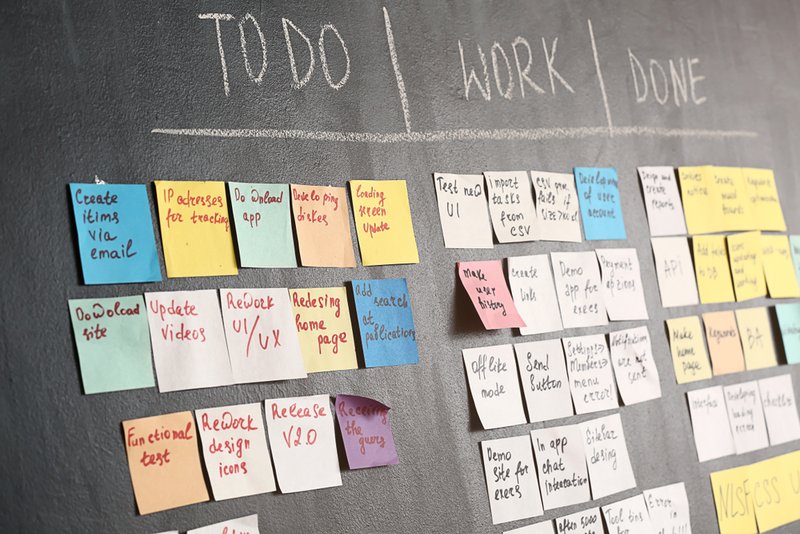
This doesn’t mean moving the goalposts every month. It means building structured moments for reflection and recalibration. It’s how agile startups survive and how large enterprises stay relevant.
When enhanced by this mindset, strategic management moves from compliance to creativity. Leaders don’t just track progress—they challenge assumptions and unlock new opportunities along the way. This mindset is also central to building resilience in times of uncertainty.
A Culture That Supports Both Focus and Flexibility
Merging agile and strategic management practices isn’t just about frameworks. It requires cultural alignment.
Agile values—like transparency, collaboration, and continuous feedback—thrive in psychologically safe environments. Strategic management flourishes in cultures of accountability and execution. Organizations that excel at both create cultures where speed and structure coexist.
This dual mindset must start at the top. Leaders need to model flexibility without losing clarity. They must communicate priorities consistently while allowing room for team-level initiative. And they must reinforce that agility isn’t chaos—it’s disciplined responsiveness.
At GSSI, we help senior and mid-level leaders develop personally and professionally, especially in mastering the art of adaptability within structured systems.
We also emphasize the importance of merging culture, accountability, and decision-making. Without this integration, even the best strategies or agile tools can fall flat due to internal misalignment.
Strategy That Moves at the Speed of Change
Long-term planning and fast execution are not mutually exclusive. In fact, today's most resilient and innovative organizations are learning to do both—anchoring themselves in clear strategic management principles while embracing the responsiveness of agile methodology.
This blended approach empowers leaders to move with confidence, even in uncertainty. It creates teams that are more engaged, more aligned, and more capable of turning vision into value.
Let’s schedule a call to discuss your business goals. Contact us today.
